Last January (09) I had on my agenda to get myself out of my studio and into other artist's studios. So I slowly began to do some local studio visits. Now, a year later, I am working on a presentation for the Fourth Annual Encaustic Painting Conference in June at Montserrat College of Art in Beverly, Mass. It is called the:
Encaustic Studio A digital look into artists' studios from around the country. We will be “visiting” artists in their studios and viewing their set up, ventilation, tools, storage, shipping, their creative process and, of course, their work. The next best thing to an actual studio visit!
I have done several studio visits so far with more to come. In the process, I am learning the etiquette of a studio visit. It is an interesting dance.
Talk about yourself, your work,etc. (at least not too much) If you don't know what to say, be honest and say you will think about the work and respond later. If you are not in the mood, don't appreciate the person's work, or aren't interested. Don't go in!! When you walk in to a person's space filled with their art and say nothing; that says everything and it's not pretty. Do plan to look and listen. spend time. drink tea (or something). ask questions. look at everything, the walls, the drawers, the floor, the work: all are clues to the artist's world. leave yourself at the door and step into the artist's shoes.
Steven Baris is an artist working in Philadelphia.The paintings are oil and acrylic. I suggest going to his website and looking at each series. Each one shows an intense and focused exploration of ideas and attributes. I am attracted to the wonderful use of color, space and use of transparency and opaqueness. Statement:
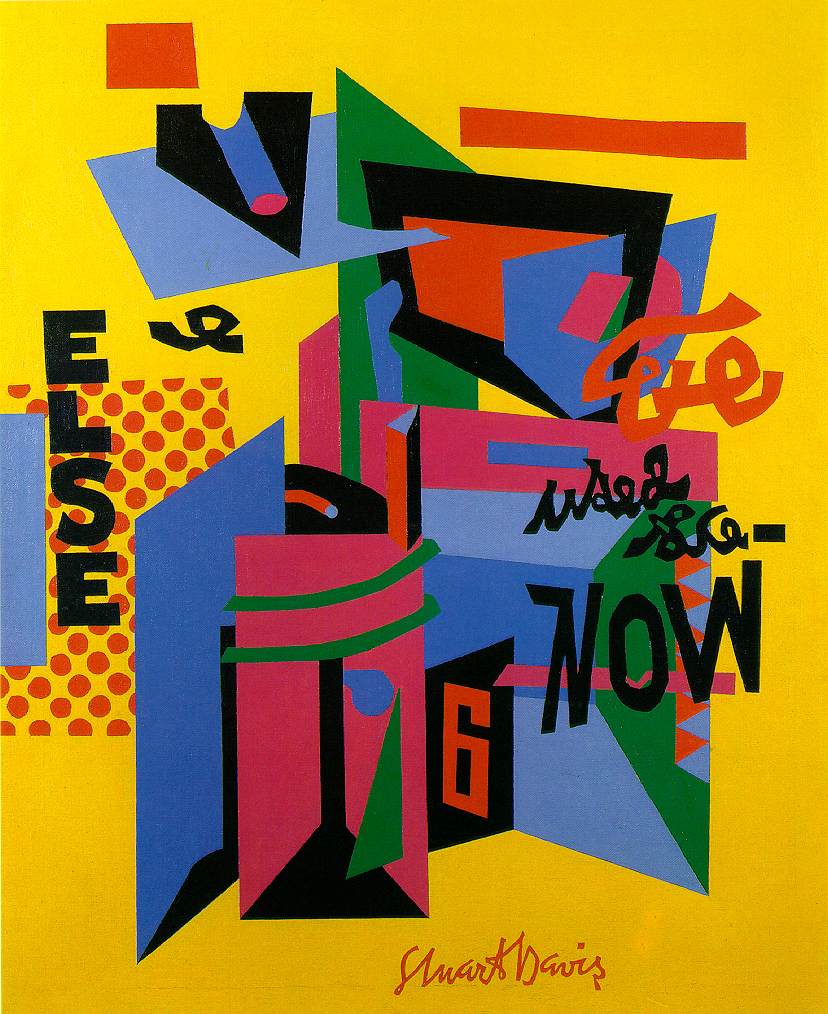
I characterize my paintings as spatial images. Space is the lens through which I best visualize the contemporary moment. Even more, it is how I make sense of my own biography, having grown up in decidedly non-urban spaces of Indian reservations throughout the West. Having since migrated to the most extensively built-up region of the continent, I have become interested in the derivative spaces of thoroughly constructed environments. My paintings attend to the spatial consequences of the countless structures that we routinely pass by and occasionally enter. My influences are many and extend into the early 20th century, including works by El Lissitzky, Moholy Nagy, and Stuart Davis. I am interested in how these and other more recent artists have registered their own contemporary moment and the unprecedented transformations of interior and exterior space.
Point of Departure 48 x 48 oil and wax LPressman My favorite time of the exhibition process is after the show is hung and before the official opening. The stress, worry, and obsessive nit picking is (mostly) over. I can spend some time with the work as it lives outside of the studio.
And, the studio is almost empty!! Point of Departure Visual Arts Center of New Jersey January 15 – March 19, 2010 Opening Reception: Friday January 15th, 2010 Installation photos:
Fields of Mars, 2009 Acrylic and paper on panel, 9" x 12" Courtesy of Blank Space Gallery, New York
I've come acrossMatthew Langley's work on several blogs and enjoy looking at it on his website. One needs to spend some time with each piece as they reveal themselves over time-a mark here, a change in color and texture there. He incorporates a wonderful use of line -the grid, of course- with drawn lines of color and surface, along with a mindful use of the edge. I find the work playful with a rich painter's vocabulary. I am looking forward to seeing his work in January.
Matthew Langley / Heejo Kim, Blank Space, Chelsea, NY
January 14 - February 2nd
Supercrush 9 x12 acrylic and paper on panel 2009
Sunshine Playroom, 2009 Acrylic and paper on panel, 9" x 12"
For Blinky, 2009 Acrylic and paper on panel, 9" x 12"
Sunflower oil on canvas, 60" x 50"Collection; Ernst and Young On Developing New Images.
The artworks come from a series of divergent strategies. One of building and extending - the other of reducing and minimizing. These disparate approaches are not a way to impose meanings on the work, but can be viewed as a metaphoric crossroads. This crossroads is about extending the relationship of these different approaches, while at the same time allowing the viewer the liberty of time for further reading of the work. The image making that comes from this strategic foundation will be clear, concise and rational, while at the same time allowing for a sense of community and/or contemplation to develop in and around the artworks.The artworks are not linear narratives, this allows the element of time to be stretched or compressed to accommodate the viewer. This flexibility to time as well as environment allows the artwork to reveal itself in slower and calmer ways than an artwork that is based only on the relationship of drama and detail of the forms presented inside of it, while allowing those with a more compressed time line to react to the base elements of the composition and painterliness of the overall approach.This open ended approach is central to the artworks I create and allows them to be developed with a non-specific exactness.February 2009
Super Nature, 2008 Acrylic on paper, 18" x 15"
On Names. Titles have become critical to my work. Primarily they re-establish a connection to the visible world and hopefully trigger a series of associations and ideas that are related between the artwork and the connotation in the viewers awareness. I avoid the descriptive and ordered approach (blue, or number 12, etc.) as well as using “untitled”. I view titles as an approach to open the viewer to a thought process that may influence the subject at hand. This could be viewed as a shorthanded poetry or similar device that allows further thought about or in connection to the artworks.January 2009
Measuring Parallels 38
wax and eggshell on aluminum panel
24 inches square
2009
I first saw Debra Ramsay 's work at one of the art fairs in NYC, in 2008. I met her this June at her and Cora Jane Glasser's show during the Third Annual Encaustic Conference in MA.That was where the conversation about titling paintings took place. Along with her paintings she also was showing small wonderful graphite works on paper-gems.
I find her work thoughtful, soulful, and meditative. It is also based on mathematics which is so far from my place of artmaking that I find it intriguing.
Deb recently had a solo show called "Balancing Act "at Blank Space in Chelsea in October. She and I also are two of the four artists chosen for the Dana Women's Artists Series:Illusive Balance: Transcendental Pattern and Layered Surface in March of 2010. Her most recent project is the Postcard Race featured below.
The Postcard Race has begun! On Nov 4, at 4:40 pm I mailed 100 postcards, asking the recipients to mail them back to me. As they return I calculate the mph that the card traveled from Nov 4 at 4:40 until the moment I receive it. I will create an installation of the cards using their speed as a distinguishing factor within the installation. So far speeds as great as .168 mph have been achieved!!
Calculated Perception, 8 forms
wax on paper
eight pieces 8 x 5.5 inches each
2009
-->
Statement
The concept of balance interests me. Metaphorically, we search for balance in our lives. In the series “Measuring Parallels” I divide the surface area of each painting into two equal parts by measurement. Using wax or eggshell to distinguish each half, I find different ways to formulate this division. “Calculated Perceptions” is a continuation of the idea, looking at the differences of perceived and calculated (measured) balance. “Equal Weights” is a series involving balance where the different materials used are of the same weight. I reduce my visual language to horizontal and vertical line.
I build abstract paintings by combining two different materials; usually pigmented wax and eggshells. Using mathematics as a tool in this binary approach, I create serially related works. In kinship with artists as diverse as Mel Bochner and Tara Donovan, I make incremental changes within the concept of a series, each painting being part of a visual progression.
My materials include eggshells. The process is based on a centuries old technique. In choosing the shapes and sizes of the fragments of shell and ascribing the areas between them, I engage in deliberate mark making. I also apply pigmented wax in multiple layers, using a variety of tools, creating subtleties of color and texture.
The materials I use leave subtle evidence of a surface worked by hand.
Debra Ramsay
2009
The shelf-life of this list will be pretty short, only because I'll want to add other names. The names I'm listing below are of people who have created work that continues to fulfill my needs for beauty, intelligence, humor, and surprise. I feel fortunate to live in such a rich visual culture with all the forms of image communication we have. It allows me to "know" the work, although never having seen the actual pieces. I recently attended, for the first time, the Biennial in Venice. That brought a slew of additional artists into my awareness. I'm still recovering from the intensity of that trip.Artists work that I'm happy that I know about:
Walter DeMaria Alfonso Bianchi Pak Sheung Chuen Tara Donovan Byron Kim Sol LeWitt Georgio Morandi Lygia Pape Robert Ryman Anne Truitt
This was a great opportunity to think of them yet again! Measuring Parallels #33 encaustic, eggshell on birch panel, 2008 12 in x 24 in
Yellow and Black Balance
encaustic eggshell inlay on MDF board
four 6 x 6 inch squares
2008
About Eggshell Inlay :
This technique is believed to have originated in China, and was later transferred to Japan via Korea. Many examples from the Meiji era (late 19th century) exist today as small decorative boxes or bowls.
Actual eggshells are used, in their natural colors of white, brown and blue/green.


 Marybeth Rothman at her thinking desk